Home / Articles
Dental Implants vs. Bridges: What’s Right for You?
Home / Articles
Dental Implants vs. Bridges: What’s Right for You?
Imagine you’re enjoying Seoul’s vibrant café scene in Gangnam, chatting with friends or colleagues when you catch your reflection and notice a gap where a tooth once was. It might be a back molar that makes chewing awkward, or a front tooth that subtly changes your confidence when you smile. You’re not alone—tooth loss is more common than most people realize, and modern dentistry offers more than one way to restore your smile. The two most trusted options? Dental implants and dental bridges.
But which one is right for you? At Smile View Dental Clinic in Gangnam, we help patients navigate this decision every day. Led by Dr. Han-Gyeol Kim, who brings elite training from Yonsei, Harvard, and UCLA, our clinic is grounded in precision diagnostics and patient-first planning. In this article, we’ll unpack everything you need to know to make an informed, confident decision about your dental future.
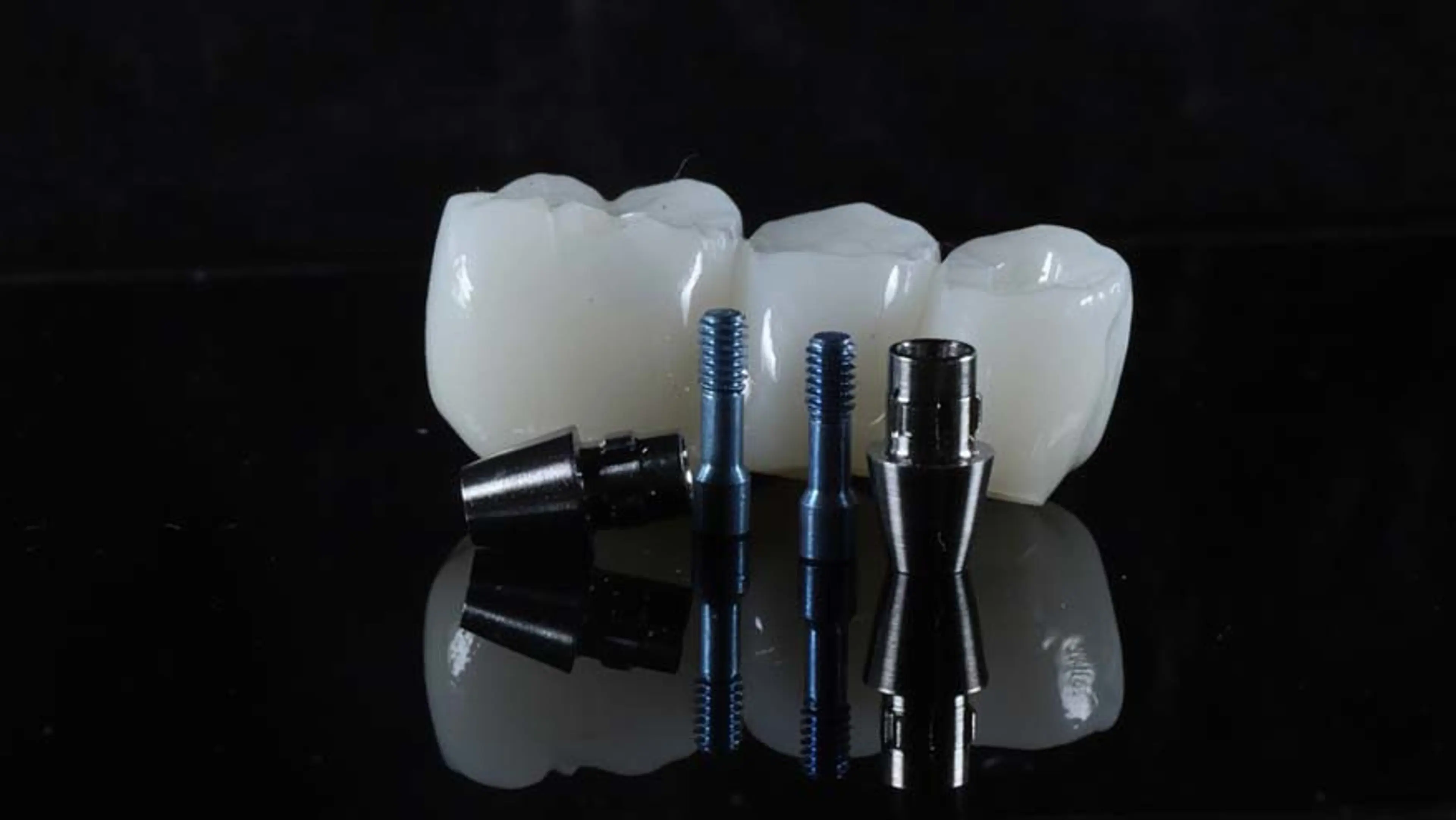
A dental implant is more than just a replacement tooth—it's a titanium or ceramic post surgically embedded into your jawbone, acting as an artificial root. Once healed, it supports a crown that looks, feels, and functions like a natural tooth. Because it integrates with your bone, the implant preserves your facial structure and prevents bone loss.
Dental implants can be used to replace a single tooth, several teeth, or even an entire arch using implant-supported bridges or dentures. The result is a highly stable, long-lasting solution that mimics the strength and appearance of natural teeth.
A dental bridge fills the gap left by a missing tooth by anchoring a prosthetic tooth (pontic) to the neighboring teeth (abutments). These supporting teeth are typically crowned to secure the bridge. The result? A functional, aesthetic restoration that doesn’t require surgery.
There are several types of bridges:
Each type has specific applications, and the choice depends on location, bite, and patient preference.
At Smile View Dental Clinic, we never recommend treatment based on guesswork. Here’s what we assess:
We combine 3D imaging (CBCT), digital impressions, and interdisciplinary consultations to provide fully customized plans for each patient.
Consider the case of Mr. Park, a 40-year-old IT consultant working in Gangnam. After losing a molar to decay, he visited us looking for a long-term solution. His initial concern was cost, but he was also worried about future damage to adjacent teeth. After a full diagnostic workup, we found that his bone volume was excellent, and his surrounding teeth were untouched by decay.
We walked him through both options. While a bridge would be faster and cheaper, it would involve modifying two perfectly healthy teeth. Mr. Park chose an implant. The procedure was smooth, healing was uneventful, and today he eats and smiles with complete confidence.
Another case involved Ms. Yoon, a 55-year-old who had lost three adjacent lower molars. She initially wanted implants, but due to low bone volume and a history of gum disease, the risk was high. We instead recommended a bridge anchored on existing crowns, allowing her to restore chewing function quickly and safely.
You need a quick fix for an upcoming event.
Budget constraints are primary.
Adjacent teeth already have crowns or large restorations.
You have insufficient bone or are medically unsuitable for surgery.
You want a long-lasting, stable solution.
You prefer not to alter healthy teeth.
You have strong bone and gum health.
You prioritize aesthetics and want the most natural look and feel.
In Gangnam, cosmetic standards are understandably high. Whether you’re a professional, student, or influencer, your smile is part of your identity. That’s why Smile View Dental Clinic emphasizes precision planning, minimally invasive techniques, and aesthetic harmony in every case. Our interdisciplinary team collaborates across oral surgery, prosthodontics, and orthodontics to craft solutions that are beautiful, functional, and built to last.
Patients often seek subtle enhancements that preserve a natural appearance—not artificial perfection. We use advanced shade-matching, custom zirconia or porcelain crowns, and digital workflow to achieve lifelike results. Our goal isn’t just to replace a tooth—it’s to complete a smile with harmony and elegance.
The truth is, there’s no one-size-fits-all answer. Choosing between a dental implant and a bridge depends on your oral health, lifestyle, and goals. What matters most is making that decision with the guidance of professionals who see the full picture.
At Smile View Dental Clinic, we blend world-class training with cutting-edge diagnostics to help patients make informed, confident choices. Whether you choose an implant, bridge, or a phased combination of both, our mission is to restore not just your teeth—but your comfort, confidence, and long-term wellness.
If you're considering replacing a missing tooth, we invite you to consult with Dr. Han-Gyeol Kim at Smile View Dental Clinic. Through advanced diagnostics and thoughtful planning, we’ll help you choose the option that not only restores your smile—but strengthens it for years to come.