Home / Articles
Full-Mouth Reconstruction: Is It Time for a Complete Smile Makeover?
Home / Articles
Full-Mouth Reconstruction: Is It Time for a Complete Smile Makeover?
Not all dental concerns come with pain. Sometimes, what brings patients to our clinic is a quiet awareness — a smile that doesn’t feel quite like it used to, or a growing discomfort while chewing that’s easy to ignore… until it isn’t. Often, people live with these small, accumulating issues for years, thinking they’re just a natural part of aging or “not serious enough” to fix.
But the truth is, your smile is a system — and when one part starts to shift, wear, or break down, it affects everything else. A missing tooth causes others to drift. Worn enamel leads to bite imbalances. A poor bite creates jaw tension or headaches. Over time, the smile you once trusted to eat, laugh, and connect begins to feel unfamiliar — even frustrating.
That’s when full-mouth reconstruction becomes more than just an option. It becomes a way to restore harmony — not only in how your teeth function, but in how you experience daily life. At Smile View Dental Clinic, we specialize in this kind of comprehensive, life-improving care. This article will guide you through what full-mouth reconstruction really is, how it works, who it’s for, and whether it’s time to explore it for yourself.
Most of us think of dental care in simple terms: a cavity repaired here, a crown placed there, maybe a tooth pulled and replaced. But your mouth is not a set of isolated parts. It’s a complex, dynamic system involving:
When one element changes — like a missing tooth or worn enamel — it affects the entire system. Over time, these small imbalances can lead to:
Uneven wear patterns
Bite collapse
TMJ discomfort
Chronic muscle tension or headaches
Sensitivity and pain
Difficulty chewing or speaking
Aesthetic concerns that feel “stuck”
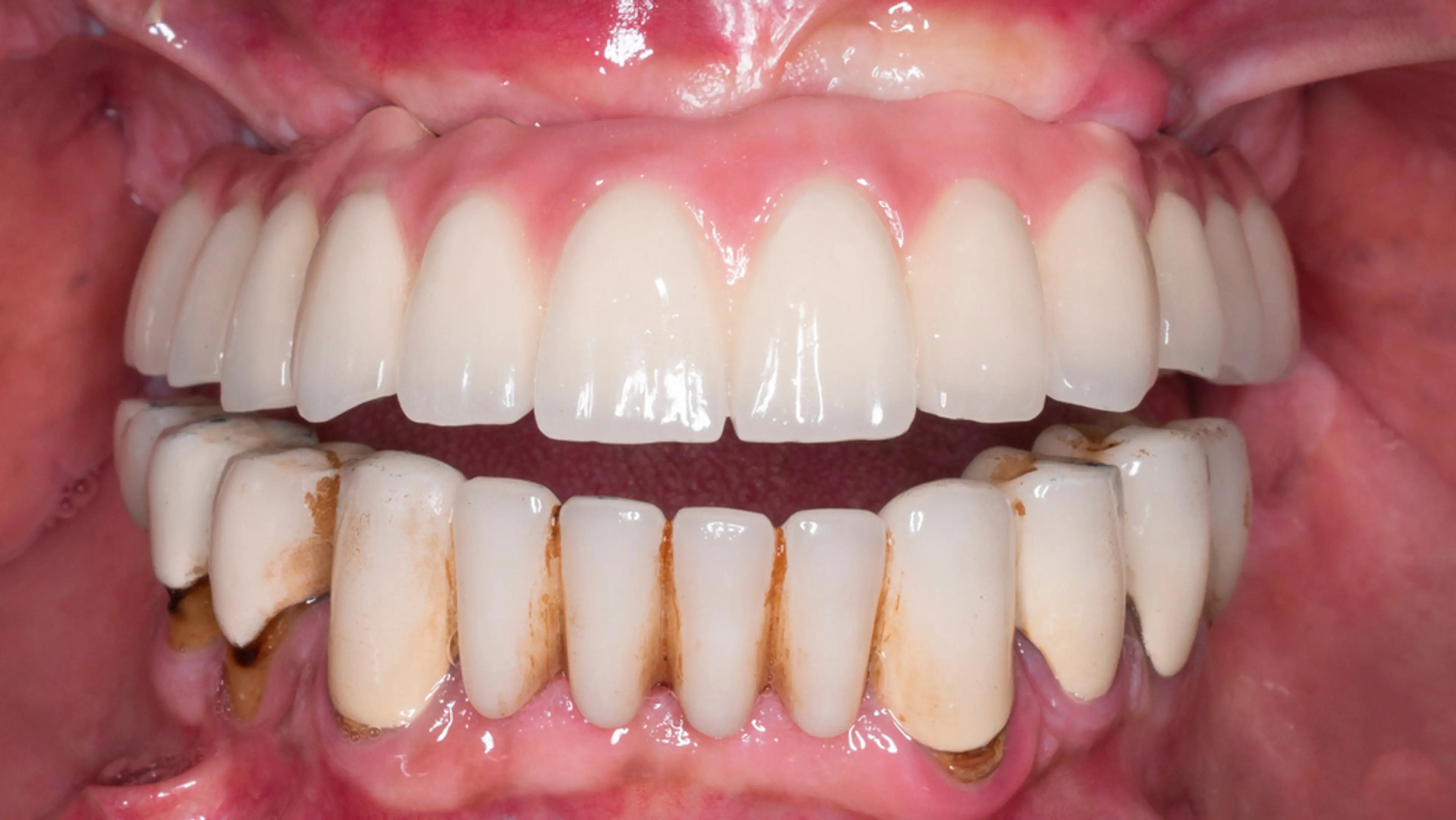
The truth is this: fixing just one symptom rarely resolves the underlying cause. And that’s why full‑mouth reconstruction is not a “luxury makeover” — it’s a comprehensive restoration that prioritizes long‑term health and function first, with aesthetics naturally following.
It’s easy to think, “I just want a prettier smile.” And that desire is completely valid. But what most people don’t realize is how deeply function and aesthetics are connected — especially in complex cases.
Consider this example:
A patient comes in wanting whiter, straighter teeth. But upon examination, we find:
Bite collapse from years of grinding
Uneven wear exposing dentin (the sensitive inner layer of tooth)
Gum recession around older restorations
One missing molar leading to shifting of adjacent teeth
Mild TMJ discomfort and jaw tension
If we only whiten and place a few veneers, the underlying functional issues remain. The restorations might look beautiful initially — but without addressing bite harmony, structural integrity, and functional balance, the results are likely to:
Wear prematurely
Lead to further pain
Cause aesthetic issues down the road
Full‑mouth reconstruction corrects the foundation first, then enhances the smile with precise cosmetic optimization. The result is not only beautiful — it’s stable, comfortable, and durable.
This isn’t a niche treatment reserved only for extreme cases. People who benefit most often share some common themes:
When several teeth are worn, fractured, missing, decayed, or poorly restored, addressing them piecemeal usually isn’t enough.
If chewing is uncomfortable, your jaw frequently clicks or aches, or you have tension headaches linked to muscle strain — these are signs that your bite isn’t functioning optimally.
If discoloration, uneven tooth shape, and alignment issues go hand‑in‑hand with a collapsing bite or worn surfaces, cosmetic work alone won’t hold up.
Crowns or fillings placed years ago may not align with your current bite dynamics — and can contribute to discomfort and decay.
Missing teeth change how forces are distributed through your bite — and can accelerate wear on the remaining ones.
Some people want quick fixes — others want solutions that last decades. Full‑mouth reconstruction is for the latter: those who want stable, lasting, whole‑smile health.
Contrary to misconceptions, full‑mouth reconstruction is not a rushed, one‑size‑fits‑all treatment. It’s a methodical, personalized journey — and every successful journey begins with a thorough evaluation.
The foundation of successful reconstruction is understanding your mouth deeply and accurately. At Smile View Dental Clinic, this includes:
Digital 3D imaging
Bite analysis and occlusal mapping
TMJ (jaw joint) evaluation
Periodontal (gum) assessment
High‑resolution photos and bite models
Joint planning by specialists (prosthodontist, orthodontist, oral surgeon)
This is not a quick exam. This is a multi‑dimensional evaluation that reveals how structures interact, how forces distribute, and where interventions will be most effective.
Once we understand your unique dental blueprint, we craft a stepwise plan that may include:
Orthodontic alignment (e.g., Invisalign)
Implant placement to restore missing roots
Crown and bridge restoration
Periodontal therapy
Bite equilibration
Cosmetic refinement (veneers, contouring)
Every phase is designed to support the next. For example, orthodontic alignment may precede implants so the bite foundation is stable before restorative work.
In many cases, preparatory work is needed:
Treating active decay
Addressing gum inflammation or disease
Removing old restorations that compromise function
Bone grafting to support future implants
These steps ensure your mouth is not just ready — but optimized before major restorative work begins.
This is where the reconstruction truly takes shape:
Implants replace missing roots and prevent bone loss
Crowns restore strength and form
Orthodontics align bite and improve force distribution
Occlusal adjustments balance function
Gum contouring refines esthetics and symmetry
It’s functional dentistry with aesthetic refinement — not the other way around.
Once the major phases are complete:
We fine‑tune bite contacts
Provide protective devices (night guards)
Establish a long‑term maintenance plan
This is where long‑term success is secured — because beautiful restorations deserve care that keeps them stable.
There is no universal timeline — and that’s a good thing. The length of treatment depends on:
Your starting condition
Whether orthodontics is needed
Whether implants are involved
Your healing response
Your personalized plan’s sequencing
Some cases complete in several months; others take 12–18 months or more. But here’s the reality patients often share afterward:
“Yes, it took time — but the result feels permanent in a way quick fixes never did.”
Modern anesthesia, sedation options, and gentle surgical techniques make the experience far more comfortable than most patients expect. Post‑procedure discomfort is usually manageable and temporary.
Investment in thoughtful reconstruction is an investment in lasting health. Treating only isolated issues often leads to repeated fixes — but addressing root causes reduces future costs and complications.
In most cases, better than you have in years. When bite function is restored, chewing becomes more efficient and comfortable.
Not necessarily. Health matters more than age. Many patients in their 50s, 60s, or beyond find renewed comfort and function through reconstruction.
Comprehensive diagnosis
Multidisciplinary planning
Precision execution
Long‑term vision
At Smile View Dental Clinic, we integrate prosthodontics, orthodontics, oral surgery, and cosmetic expertise. That means your plan isn’t just designed — it’s coordinated by specialists focused on your comfort and outcomes.
A patient in her 40s came in after years of grinding, frequent headaches, and difficulty chewing. After reconstruction, she told us:
“It feels like I can use my smile again — not just show it.”
A long‑time bruxism sufferer had remodeled bite and chronic jaw tension. After a staged plan including orthodontics and occlusal refinement, he reported:
“I didn’t realize how much stress I carried until it was gone.”
These aren’t isolated stories — they reflect the systemic impact of oral function on overall quality of life.
A full‑mouth reconstruction isn’t just about transformation for transformation’s sake. It’s about restoring harmony, comfort, confidence, and durability. It’s about treating your smile as the functional system it truly is — and giving you a foundation that supports the way you live every day.
At Smile View Dental Clinic in Gangnam‑gu, Seoul, we approach reconstruction with precision, heart, and a commitment to outcomes that matter. With advanced diagnostics, multidisciplinary planning, and a focus on long‑term stability, we help patients rediscover smiles that feel as good as they look.
If you’re considering improving your smile — not just cosmetically, but structurally and functionally — let’s talk. A comprehensive evaluation and honest conversation about your options could be the first step toward a smile that serves you for years to come.