Home / Articles
Implants vs. Snap-On Dentures: What’s the Real Difference?
Home / Articles
Implants vs. Snap-On Dentures: What’s the Real Difference?
Imagine sitting at a lively dinner table in Gangnam. The food is vibrant, the conversation is flowing, but instead of focusing on the laughter and the flavors, you’re distracted by your teeth—or rather, the teeth you’ve lost. Perhaps your dentures don’t sit securely, or maybe you’re avoiding certain foods because chewing has become a challenge. Tooth loss affects far more than appearance. It changes how you eat, how you speak, and even how confident you feel in professional or social situations.
This is why so many patients come to us asking the same question: “Doctor, should I get dental implants, or are snap-on dentures better for me?” Both solutions restore missing teeth, but the differences between them go far deeper than most people realize. They affect not only comfort and aesthetics but also long-term oral health and lifestyle.
At Smile View Dental Clinic in Gangnam, we believe the right choice should be based on knowledge and individual needs—not guesswork. With this in mind, let’s explore the real differences between implants and snap-on dentures, and what each option means for your daily life, future health, and overall confidence.
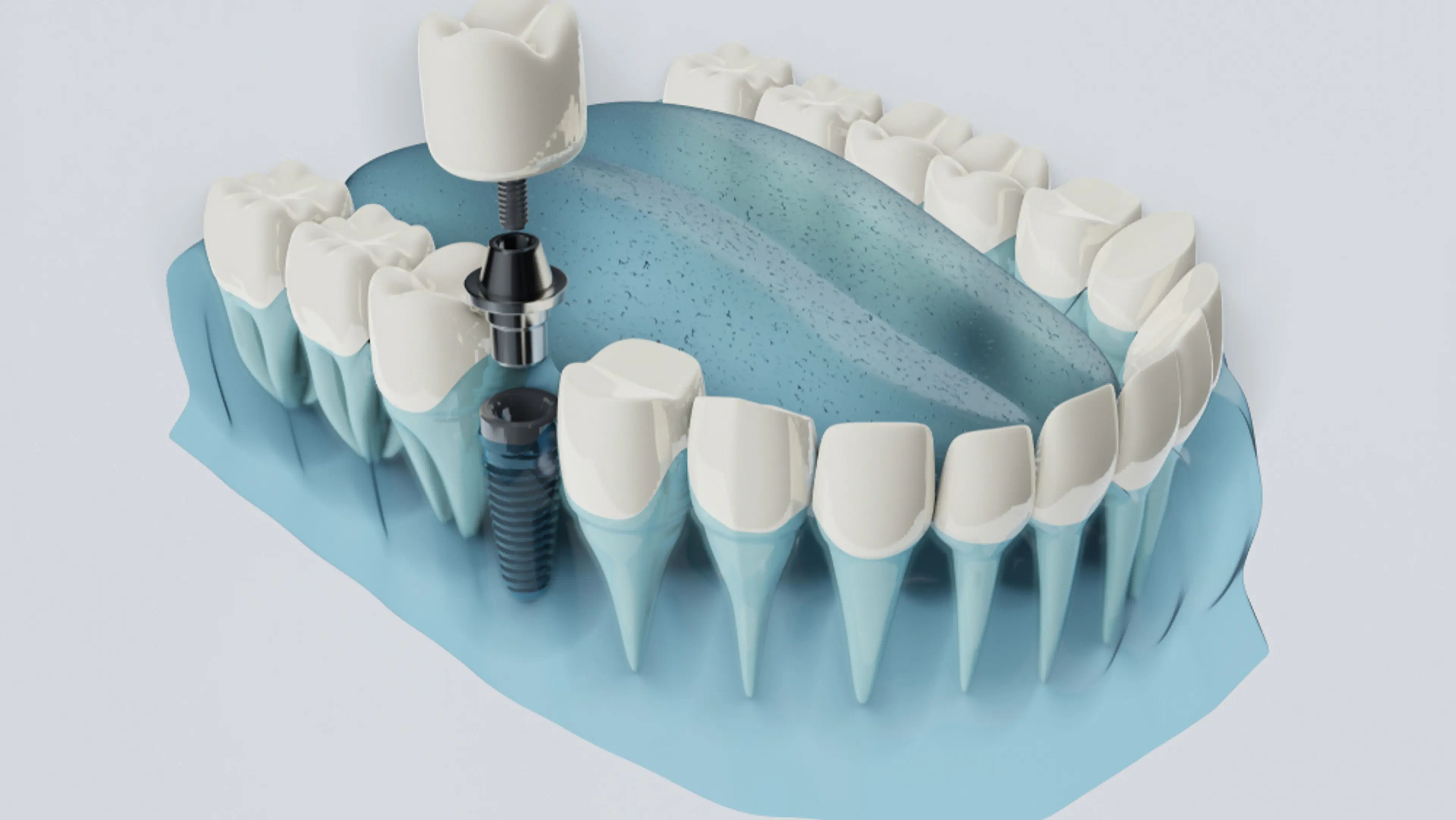
Dental implants are often referred to as the gold standard for tooth replacement—and for good reason. An implant consists of three main parts:
Over time, the titanium post fuses with the jawbone through a process called osseointegration. This not only creates exceptional stability but also helps maintain the bone structure itself.
From a patient’s perspective, implants are often indistinguishable from natural teeth in both look and feel. They do not move, do not require removal, and allow full function when eating or speaking. For many, the experience of getting implants is described as “getting their own teeth back.”
Snap-on dentures, also called implant-retained overdentures, sit between traditional removable dentures and fixed implants. They involve placing a few implants—typically two to four—in the jaw. The denture is then designed to “snap” onto these implants through special attachments.
This system provides far more stability than traditional dentures, which rest directly on the gums and often slip during eating or speaking. However, unlike fixed implants, snap-on dentures are still removable. Patients must take them out for daily cleaning, and they cover some gum tissue or the palate.
A helpful analogy is to think of dental implants as owning a home, while snap-on dentures are like leasing one. Both give you a place to live, but one is permanent and tailored to your needs, while the other offers flexibility with some compromises.
Patients often base their decision on what life will be like after treatment. This is where the practical differences become most visible.
Chewing feels almost identical to natural teeth.
Patients can enjoy tough or sticky foods—steak, apples, rice cakes—without concern.
No bulky plastic covers the palate, so taste and speech remain unaffected.
Maintenance involves brushing and flossing, just like with natural teeth.
Chewing is more stable than with traditional dentures but may still feel limited with harder foods.
Some shifting can occur, especially if the attachments loosen over time.
The denture base covers parts of the gums or palate, which can slightly affect taste and pronunciation.
They must be removed and cleaned daily, which some patients find inconvenient.
One of our patients, a 60-year-old woman who transitioned from snap-on dentures to full implants, once remarked: “With dentures, I always thought about my teeth before ordering food. With implants, I don’t think about them at all. I just live.”
When patients ask, “How long will this last?” the answer varies greatly between the two treatments.
With proper care, implants can last several decades, often for life.
The crown or bridge may need replacement after 15–20 years due to wear, but the implant itself usually remains strong.
They are considered a one-time, long-term investment.
The implants that support the denture can last many years, but the denture itself usually requires replacement every 5–10 years.
The attachments that allow the denture to “snap” onto the implants wear out and may need periodic adjustment or replacement.
Over time, ongoing maintenance may increase the total cost.
For many patients, this distinction between permanence and periodic upkeep becomes the deciding factor.
One of the most critical yet least understood differences lies in how these treatments affect jawbone health.
When a tooth is lost, the jawbone no longer receives the stimulation it needs, and bone resorption begins. This process not only weakens oral health but also changes facial appearance, leading to a sunken or aged look.
Patients who are younger or especially concerned about maintaining facial aesthetics usually find implants more appealing for this reason.
Both treatments can restore a natural-looking smile, but there are differences in refinement.
In a society like Korea, where smiles play a central role in social and professional settings, patients often prioritize the most natural and confident aesthetic possible—which is why implants are widely chosen in Gangnam.
Cost is often the most immediate concern for patients.
Higher upfront cost, especially for full-arch reconstructions.
Because they last for decades, they are usually more economical in the long run.
Lower initial cost since only a few implants are needed.
However, maintenance, adjustments, and replacements accumulate over time.
For patients seeking a balance, some clinics—including ours—recommend beginning with snap-on dentures and later transitioning to full implants once circumstances allow.
Every patient’s case is unique, but some general guidelines can help clarify suitability.
Patients wanting the closest replacement to natural teeth.
Individuals with sufficient bone density (or willingness to undergo bone grafting).
Those looking for a permanent solution with minimal long-term maintenance.
Patients seeking better stability than traditional dentures at a more accessible cost.
Individuals with significant bone loss who may not yet qualify for full implants.
Those preferring a less invasive procedure or a transitional option.
At Smile View Dental Clinic in Gangnam, we pride ourselves on tailoring solutions to each patient’s needs. Under the leadership of Dr. Han-gyeol Kim—trained at Yonsei University, Harvard, and UCLA—our clinic combines international expertise with advanced digital dentistry.
We begin every case with comprehensive diagnostics, including 3D imaging, occlusion analysis, and digital smile design. Our team of oral surgeons, prosthodontists, and restorative specialists then collaborate to determine whether implants, snap-on dentures, or a staged approach is best.
We have seen countless transformations. Patients who once hid their smiles behind their hands now laugh openly. Those who avoided favorite foods rediscover the pleasure of dining. Many describe the experience not as dental treatment, but as regaining a part of themselves.
Choosing between dental implants and snap-on dentures is not just about replacing teeth—it’s about restoring your quality of life. While both treatments can rebuild a smile, they offer very different experiences and outcomes.
Ultimately, the best choice depends on your personal goals, oral condition, and lifestyle. At Smile View Dental Clinic, we see every patient as unique, and we approach every case with precision, advanced technology, and a commitment to long-term well-being.
If you are considering implants or snap-on dentures, we invite you to schedule a consultation with Dr. Han-gyeol Kim and our team in Gangnam. Together, we can design a treatment plan that not only restores your teeth but also gives you back the comfort, confidence, and freedom to smile without hesitation.