Home / Articles
Should You Whiten Before or After Veneers? Experts Explain
Home / Articles
Should You Whiten Before or After Veneers? Experts Explain
You're finally ready to invest in your smile. Maybe you've saved up for years or had a consultation that left you feeling hopeful. You know veneers can provide the flawless, camera-ready smile you've always wanted. But then your dentist asks: "Have you thought about whitening your teeth first?"
Suddenly, you're unsure. Should whitening come before veneers, after, or does it even matter?
At Smile View Dental Clinic in Gangnam-gu, Seoul, this is a question we hear often. And it's not just a cosmetic curiosity—it's a decision that can dramatically impact the final look and longevity of your smile. With advanced training from Yonsei, Harvard, and UCLA, Dr. Han-gyeol Kim and our team of integrated dental specialists understand that achieving an ideal smile involves strategic planning, not guesswork.
In this article, we explore the clinical and aesthetic reasoning behind whitening timing, using real patient scenarios and expert insight to help you make the right decision. Whether you're preparing for a major life event or simply want to boost your self-confidence, knowing the proper sequence can save you time, discomfort, and costly revisions down the line.
To understand the sequencing, let’s first define the materials we’re working with.
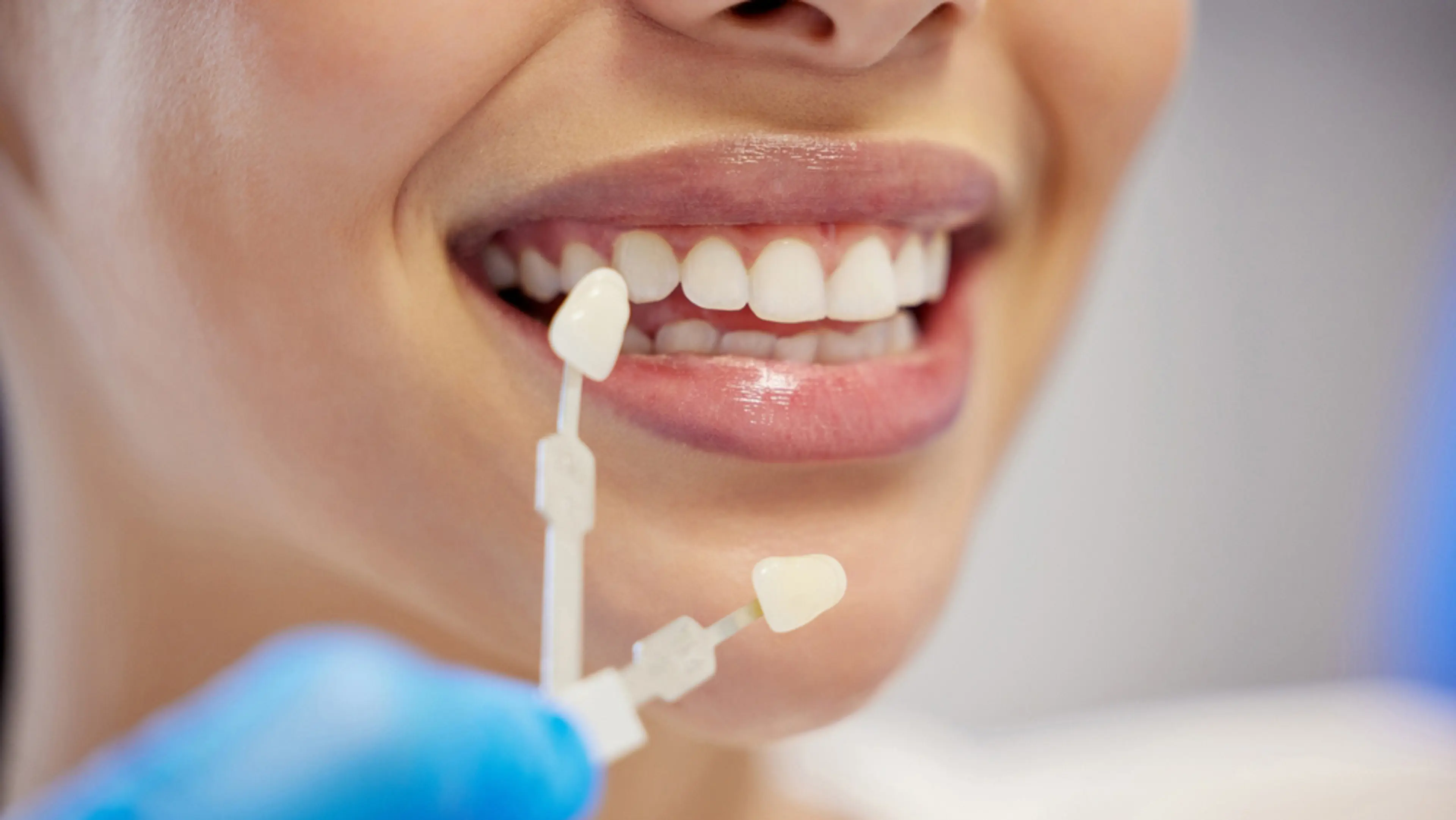
Veneers are thin shells of porcelain or composite resin bonded to the front of teeth. They’re designed to improve color, shape, and alignment—often used in high-aesthetic zones like the front teeth. Porcelain veneers, in particular, offer durability, stain resistance, and lifelike translucency that mimics natural enamel.
Teeth whitening, meanwhile, involves using peroxide-based agents to lighten the shade of natural tooth enamel. Importantly:
So if you're whitening after veneers, only your natural teeth will brighten, possibly creating uneven shades across your smile. This contrast is most noticeable when smiling, laughing, or speaking—situations where natural and veneered teeth are visible side-by-side.
In most cases, you should whiten your teeth before getting veneers. Here's why:
Dental labs use your existing tooth color as a reference when creating your veneers. If you plan to whiten later, the veneers will remain darker than your newly whitened natural teeth—an effect that often looks mismatched or artificial.
Whitening first allows your veneers to be matched to your ideal, brighter base shade. Once porcelain is fabricated, its color is fixed. Trying to adjust surrounding teeth afterward often leads to repeated whitening sessions and potential tooth sensitivity.
At Smile View Dental Clinic, we take a holistic view of the smile. A uniform appearance across all visible teeth is vital, especially when dealing with high-definition cameras and close-up interactions common in professional or social settings in Seoul.
A mismatch in shades can unintentionally draw attention to the restoration itself, undermining the goal of natural enhancement. Whitening first allows your entire smile—veneers and natural teeth—to look cohesive.
Whitening before veneers means less need for rework later. If you whiten after your veneers are placed, the natural teeth may no longer match the fixed shade of the veneers. This mismatch often prompts patients to replace veneers sooner than necessary.
Veneer replacement is not only expensive but can involve unnecessary wear on your natural teeth. Think of it like painting one wall in your home white, then deciding later to repaint the others. Consistency from the start yields the best result.
Patients who complete whitening beforehand often report higher satisfaction with their overall appearance. The result looks intentional, seamless, and vibrant. More importantly, the added brightness enhances facial aesthetics—eyes look whiter, lips appear fuller, and overall symmetry is improved.
Though rare, some cases do not require whitening before veneer placement.
If you’re planning a complete smile makeover with veneers on all visible teeth (often 8-10 units), whitening beforehand becomes optional. The color of your natural teeth becomes less relevant because it won't be visible once veneers are in place.
However, this is typically recommended only for patients seeking major cosmetic transformations, not those receiving 2-4 veneers. Even then, if there are any visible lower teeth or molars not covered by veneers, whitening may still play a role.
Some patients are not candidates for whitening due to sensitivity or enamel defects. In such cases, our team uses digital smile design to choose a naturally bright veneer shade that complements the patient's skin tone and lip line without relying on whitening.
We also offer desensitizing protocols and staged whitening approaches for those with borderline sensitivity, allowing more patients to benefit from this step without discomfort.
Here is how we typically guide our patients at Smile View Dental Clinic when both whitening and veneers are involved:
We evaluate your overall oral health, take digital scans, and discuss your aesthetic goals. This includes analyzing tooth shade, facial symmetry, and gum health. Patients are encouraged to bring inspiration photos to better communicate their vision.
Depending on your needs, we may recommend:
Whitening is typically completed over 1-2 weeks, though heavily stained teeth may require more time.
After whitening, we wait 10-14 days for the shade to stabilize. This ensures accurate color matching when your veneers are fabricated. During this time, we may use mock-ups or temporary restorations to test shapes and designs.
We use CAD/CAM technology and 3D smile simulations to create veneers that suit your facial features. This includes factoring in tooth length, width, color layering, and incisal translucency. Your new veneers are then custom-matched to your final, post-whitening shade.
After a trial fitting and adjustments, your veneers are bonded in place using high-strength resin. We check for bite harmony, speech changes, and esthetic balance. The result? A luminous, even-toned smile that looks natural and feels comfortable.
Consider one of our recent patients, a professional in her 30s preparing for her wedding. She had four veneers placed a few years prior but had never whitened her surrounding teeth. As her big day approached, she wanted a brighter smile for photos.
Unfortunately, whitening after veneers caused a stark contrast between the brightened natural teeth and her older veneers. We ultimately replaced the veneers to match her new shade—a fix that could have been avoided with a different sequence.
Her advice to other patients?
"I wish I had whitened before my veneers the first time. Doing it right the second time made all the difference."
This story is not unique. We see similar cases weekly—many stemming from incomplete planning or rushed cosmetic procedures elsewhere. Taking the time to do things right the first time is not only more cost-effective but more emotionally satisfying.
No. Porcelain and composite do not respond to whitening agents. The color is baked into the material and remains unchanged.
No, but it also won’t improve their appearance. Whitening will affect only your natural teeth.
Yes, but expect a shade mismatch unless you redo your veneers. For that reason, most cosmetic dentists recommend whitening before veneer fabrication.
Whitening becomes even more important. Small numbers of veneers are harder to color-blend if the natural teeth aren't at your desired shade.
While ultra-white shades may seem appealing, we work with patients to select tones that enhance beauty without looking artificial. The goal is natural brilliance—not glow-in-the-dark.
When it comes to cosmetic dentistry, sequencing can make or break your results. Whitening your teeth before veneers isn't just about getting a lighter shade—it's about creating a harmonious, natural-looking smile that ages well and gives you long-term confidence.
At Smile View Dental Clinic, we combine global expertise with precision diagnostics to guide you through the process. Dr. Han-gyeol Kim and our team believe that thoughtful planning, including the timing of whitening, sets the foundation for a beautiful and lasting smile.
We often tell patients, “Don’t think of whitening as a separate treatment—think of it as the underpainting of your new smile.” Done right, it enhances every other aspect of your aesthetic result.