Home / Articles
What Is Surgery-First Orthodontics—and Who Can Benefit?
Home / Articles
What Is Surgery-First Orthodontics—and Who Can Benefit?
In Gangnam, patients seeking orthodontic care often share a similar hesitation. They understand that jaw alignment affects not only their smile, but also their facial balance, speech, and long-term oral health. Yet many pause when they hear the words “years of braces before surgery.”
You might be surprised to learn that this traditional sequence isn’t the only path forward.
For decades, orthodontics and jaw surgery followed a fixed order: align the teeth first, operate later. While clinically sound, this approach often placed patients in an uncomfortable position—enduring a prolonged phase where both appearance and bite could temporarily worsen. In a culture that values natural facial harmony and efficiency, especially here in Gangnam, that trade-off doesn’t always feel reasonable.
This is where Surgery-First Orthodontics enters the conversation. Rather than delaying meaningful change, this approach addresses the skeletal foundation—the jaws—at the very beginning. When planned with precision and executed by an integrated team, surgery-first orthodontics can offer earlier facial improvement, a shorter overall treatment timeline, and a more psychologically comfortable journey for the patient.
At Smile View Dental Clinic, led by Dr. Han-gyeol Kim, surgery-first orthodontics is not viewed as an aggressive alternative, but as a carefully selected strategy—used only when it supports long-term stability, function, and aesthetic balance. Understanding who truly benefits from this approach is the first step toward making an informed decision.
To appreciate why surgery-first orthodontics exists, it helps to understand the traditional model.
In conventional orthognathic treatment, patients typically undergo:
From a purely technical standpoint, this sequence is logical. But from a patient’s perspective, it can be emotionally and socially taxing. During pre-surgical orthodontics, facial aesthetics may temporarily worsen, which is especially challenging in appearance-conscious environments like Gangnam.
This gap between clinical logic and patient experience is exactly where surgery-first orthodontics emerged.
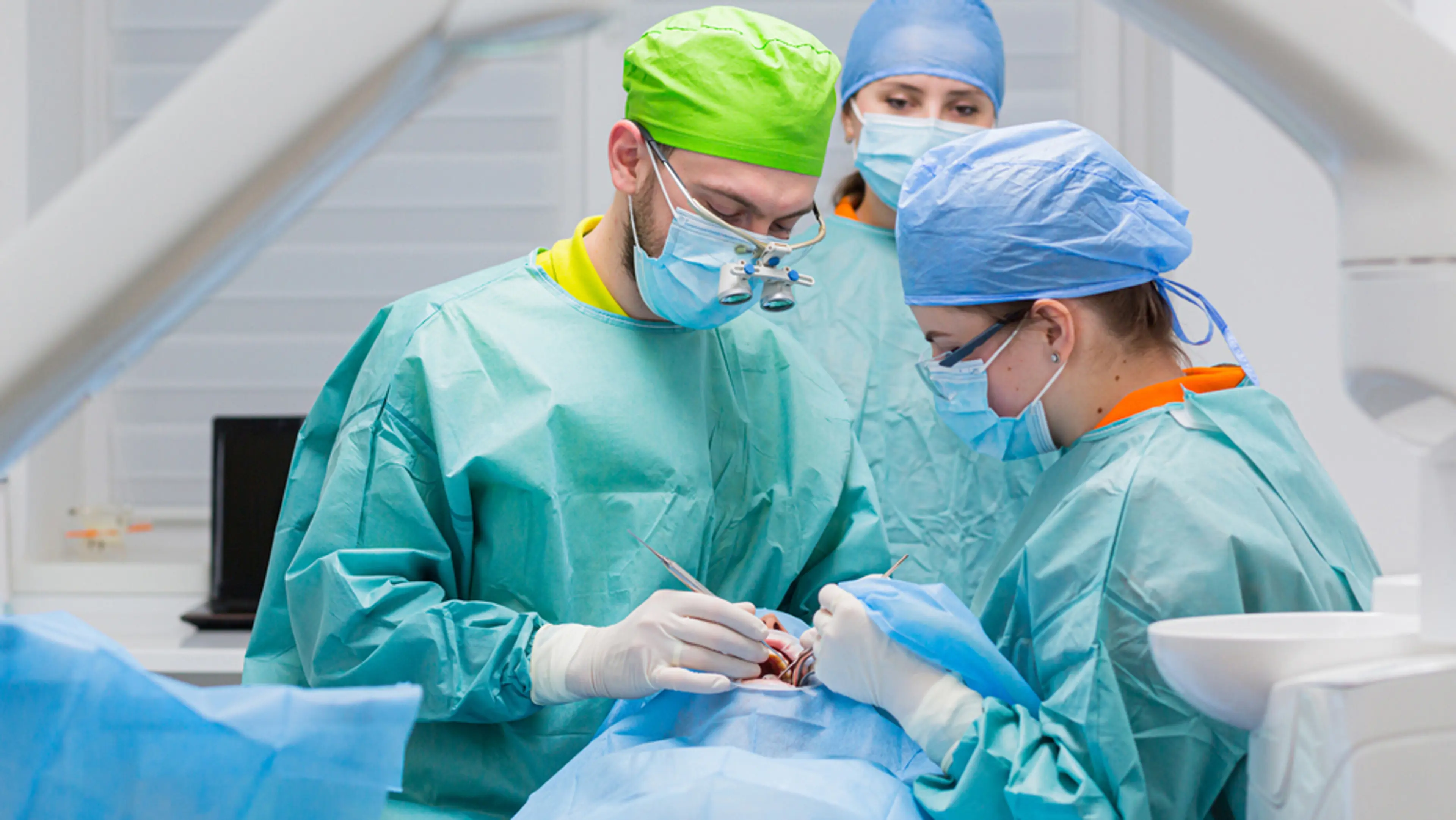
Surgery-First Orthodontics (SFO) is a treatment approach in which jaw surgery is performed before orthodontic alignment, followed by braces or aligners to fine-tune tooth position and bite.
Instead of spending months preparing the teeth for surgery, the surgical correction addresses the primary skeletal problem first—the jaws—while orthodontics completes the details afterward.
At Smile View Dental Clinic, this approach is made possible through:
3D CBCT imaging
Digital bite and occlusal analysis
Virtual surgical simulation
Close, real-time collaboration between orthodontists and oral surgeons
In other words, surgery-first orthodontics is not about skipping steps—it’s about reordering them intelligently.
Most jaw discrepancies are skeletal problems first, dental problems second. Correcting the jaw foundation early often simplifies everything that follows.
From a patient’s point of view, surgery-first orthodontics offers three powerful advantages:
Patients see changes in facial symmetry, profile, and jaw balance right after surgery—rather than waiting years.
For many, this is not just cosmetic. Facial imbalance can deeply affect confidence, social interactions, and even professional life.
While individual results vary, many surgery-first cases are completed in 12–18 months, compared to 2.5–3 years with traditional sequencing.
Avoiding the “it gets worse before it gets better” phase can dramatically improve patient motivation and emotional comfort during treatment.
Here’s an insight that comes directly from clinical experience.
After jaw surgery, the body enters a temporary phase called the Regional Acceleratory Phenomenon (RAP). During this time, bone metabolism increases, allowing teeth to move more quickly and efficiently under orthodontic forces.
Think of it like fine-tuning a musical instrument immediately after adjusting its frame—everything responds more fluidly.
This biological window is one reason post-surgical orthodontics in surgery-first cases can progress faster when planned carefully.
This is the most important question—and where experience truly matters.
At Smile View Dental Clinic, surgery-first orthodontics is considered only when multiple criteria are met, including:
Skeletal underbite (Class III)
Jaw retrusion or protrusion affecting facial balance
Facial asymmetry
Vertical jaw discrepancies (open bite)
Mild to moderate dental crowding
Stable initial tooth contacts that allow accurate surgical positioning
Equally important is the patient’s mindset. Surgery-first orthodontics requires:
High compliance with post-surgical orthodontic visits
Willingness to follow instructions precisely
Realistic expectations about healing and refinement
Surgery-first orthodontics is not universally appropriate, and offering it without strict screening is risky.
Patients may be better served by traditional sequencing if they have:
Severe dental crowding or rotations
Heavy dental compensation masking skeletal problems
Advanced periodontal disease
Active or unmanaged TMJ disorders
Expectations focused only on speed, not stability
This includes facial analysis, jaw function assessment, airway evaluation, and occlusal stability checks. Dr. Han-gyeol Kim’s advanced training in occlusion and implant biomechanics ensures that jaw positioning supports long-term oral health—not just aesthetics.
Every millimeter matters. Using virtual surgical planning, we simulate jaw movement, predict tooth migration, and plan orthodontic mechanics before a single incision is made.
Surgery focuses on restoring proper skeletal relationships while minimizing invasiveness and protecting long-term joint and muscle health.
Braces or Invisalign are used during the RAP window to refine alignment and finalize the bite efficiently.
Treatment does not end when braces come off. Long-term retention and functional checks are essential for durable results.
This is one of the biggest misunderstandings.
While facial aesthetics improve early, surgery-first orthodontics is fundamentally function-driven. Proper jaw alignment improves:
Chewing efficiency
Speech clarity
Airway support
Load distribution on the TMJ
A smile that looks good but functions poorly will never remain stable. At Smile View Dental Clinic, function is always the foundation of beauty.
Surgery-first orthodontics is often described as an advanced or innovative technique—but in reality, it is better understood as a systems-based approach. Its success depends far less on the concept of “surgery first” and far more on how deeply integrated the dental team is.
At Smile View Dental Clinic, integrated dentistry is not a marketing term—it is the clinical infrastructure that makes surgery-first treatment feasible in the first place.
In traditional dental systems, orthodontists, oral surgeons, and restorative dentists often work in parallel rather than in unison. Each specialty does its part, but planning happens in fragments.
That model struggles with surgery-first orthodontics for one simple reason:
You cannot reposition the jaws accurately unless you fully understand how the teeth, bite, joints, muscles, and future restorations will function together.
When surgery is performed first:
The teeth are not yet ideally aligned
The bite is temporarily unstable
Post-surgical orthodontics must compensate intelligently for both skeletal and dental changes
This level of complexity cannot be managed by a single specialty working alone.
Integrated dentistry means that all specialties participate in diagnosis and planning from the very beginning, rather than handing the patient off step by step.
At Smile View Dental Clinic, surgery-first orthodontics is planned through a unified framework that includes:
Orthodontic biomechanics
Jaw surgery positioning
Occlusal (bite) stability
TMJ and muscle balance
Long-term restorative considerations
This ensures that every movement—whether surgical or orthodontic—serves the same final goal.
In practical terms, this means:
The surgeon knows how the teeth will move after surgery
The orthodontist knows how the jaws must be positioned surgically
Both understand how the bite must function 10–20 years later
That shared endpoint is what makes surgery-first orthodontics safe.
For the right candidate, correcting the jaw first can bring immediate improvements in facial balance, chewing function, and self-confidence. It can reduce total treatment time and eliminate the emotionally difficult phase of looking worse before looking better. But when used without proper diagnosis or interdisciplinary coordination, it can compromise long-term stability.
That is why experience and integration matter more than the technique itself.
If you have been told that jaw correction requires years of braces before any visible change, it may be time to explore whether a different sequence is possible for you. Not every patient is a candidate—but for those who are, the difference can be life-changing.