Home / Articles
What’s the Most Natural-Looking Shade for Veneers?
Home / Articles
What’s the Most Natural-Looking Shade for Veneers?
In Gangnam, where the standards for beauty and self-presentation are among the highest in the world, a radiant smile is more than just an accessory—it’s a symbol of confidence and refinement. Many patients who visit Smile View Dental Clinic share the same concern: “I want veneers, but I don’t want them to look fake.”
It’s a common worry. On one end of the spectrum, patients dream of flawless, pearl-white smiles like those of celebrities. On the other, they fear veneers that look too artificial, too bright, or mismatched with their natural features. The truth is, the “most natural-looking shade” of veneers isn’t about choosing the whitest option—it’s about finding the shade that harmonizes with your skin tone, eyes, facial features, and personality.
At Smile View Dental Clinic, led by Dr. Han-gyeol Kim and his multidisciplinary team, veneer treatment is never a one-size-fits-all process. Instead, it’s a highly personalized journey that balances aesthetics with authenticity.
So, what is the most natural-looking shade for veneers—and how do you find yours? Let’s take a closer look.
Veneers are designed to transform your smile, but the success of the transformation depends heavily on shade selection. Think of it like tailoring a suit: you could buy the most expensive fabric, but if the fit isn’t right, it won’t look elegant. Similarly, the wrong veneer shade can appear “too white,” flat, or mismatched with the rest of your appearance.
When veneers don’t look natural, they tend to draw the wrong kind of attention—people notice the veneers themselves instead of the smile as a whole. A well-chosen shade, however, blends seamlessly, enhancing your beauty without announcing itself. That’s what we call a “quiet luxury smile”—refined, timeless, and natural.
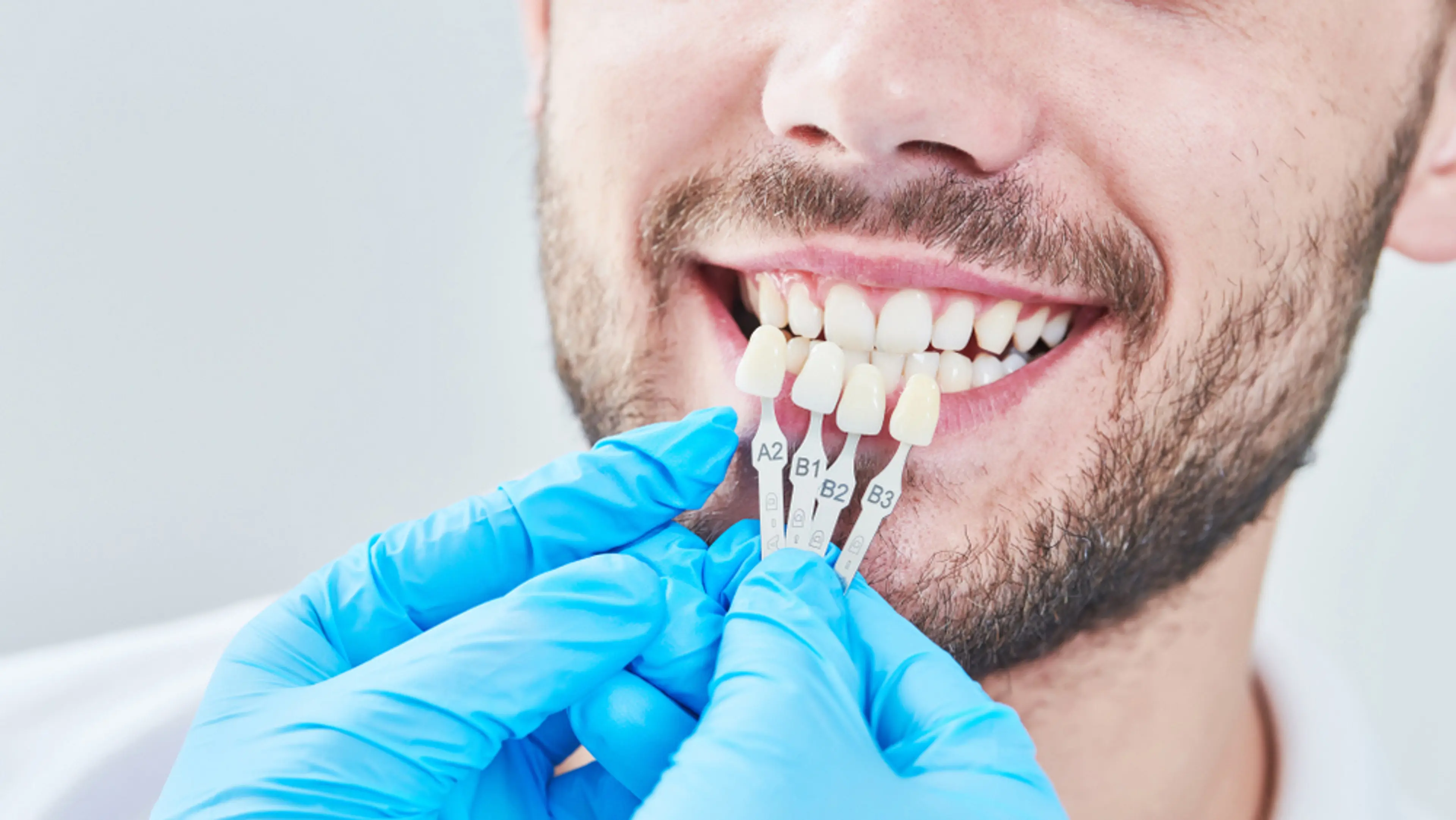
You might assume teeth come in only one kind of white, but in dentistry, shades are carefully classified. The VITA classical shade guide, a tool widely used around the world, categorizes teeth into four major groups:
Within these families, shades are numbered from lighter to darker. For example, A1 is lighter than A3.
For veneers, dentists often avoid the darkest shades, instead choosing from the lighter end of the spectrum. In addition, modern dentistry offers “bleach shades” (BL1, BL2, BL3), which are whiter than anything found in the natural shade guide. While some patients love the brilliance of bleach shades, they rarely qualify as “natural-looking.”
Many patients initially request the brightest possible shade, assuming it will make their smile stand out. But here’s a professional secret: the brightest shade isn’t always the most flattering.
In real life, teeth that are whiter than the whites of your eyes (sclera) can look artificial, even distracting. This is why veneers that look dazzling in photographs or under studio lighting may feel “too much” in everyday interactions.
At Smile View Dental Clinic, we often compare veneer shades to luxury fashion. A tailored suit in a natural tone looks elegant and timeless, while a flashy, ill-fitting one may grab attention—but not in the right way. Similarly, veneers that are slightly softer in shade often look more expensive and natural than overly white veneers.
Choosing veneer shade is not a simple decision—it’s a holistic evaluation of your entire appearance. Here are the key factors we consider:
Your skin provides the backdrop for your smile. Fair skin may pair beautifully with a lighter shade like B1, while deeper or warmer skin tones often look best with slightly softer options like A2 or B2, which avoid harsh contrast.
A smile should never overpower the eyes. If your veneers are significantly whiter than your sclera, the imbalance can make the veneers look fake. Matching teeth brightness to eye whites creates harmony.
Younger patients may naturally have brighter enamel, so a lighter shade can look natural on them. For older patients, however, ultra-white veneers can sometimes look mismatched with facial maturity. Choosing a realistic shade ensures timeless beauty.
In Seoul, patients increasingly ask for “natural elegance” rather than Hollywood brightness. The trend leans toward veneers that look like well-cared-for natural teeth—not a row of identical porcelain. Still, some patients want a celebrity-level white, and in those cases, our job is to achieve balance while honoring their wishes.
Here’s something most patients don’t realize: shade alone doesn’t determine naturalness.
Real teeth aren’t one flat color. They have multiple layers: a slightly darker core, translucent edges, and tiny textural details that catch the light differently. High-quality veneers mimic this complexity.
At Smile View Dental Clinic, we use advanced ceramics and digital smile design technology to replicate the depth of natural enamel. This includes:
Patients often tell us, “I can’t even tell which are the veneers and which are my real teeth.” That’s exactly the goal.
One of our Gangnam patients, a 32-year-old professional, came in requesting the brightest BL1 shade. She said, “I want my smile to be unforgettable in business meetings.”
After digital previews, we showed her the difference between BL1 and a softer A1 shade. To her surprise, A1 looked healthier and more harmonious against her skin and eyes. She chose A1—and later told us that colleagues kept complimenting her smile, but no one guessed she had veneers.
This story highlights an important truth: natural doesn’t mean dull. It means balanced, radiant, and authentic.
We start by discussing your goals—whether you prefer a bright, striking smile or a softer, natural look.
Using advanced tools, we compare your natural teeth to standardized shade guides. We also factor in your facial features and lifestyle.
You don’t have to imagine your new smile—we create digital simulations and temporary mock-ups so you can see the shade in real life before committing.
Our veneers are crafted with precision by skilled ceramists who specialize in layering porcelain for lifelike results. Every case is unique.
When it comes to veneers, the goal isn’t to have the brightest smile in the room—it’s to have the most natural, confident smile that feels like you. The most natural-looking shade is one that harmonizes with your skin tone, eyes, and overall appearance, blending so seamlessly that no one can tell where your teeth end and your veneers begin.
At Smile View Dental Clinic in Gangnam, we believe veneer treatment is both an art and a science. With Dr. Han-gyeol Kim’s international expertise and our integrated approach to smile design, we help patients achieve results that are elegant, balanced, and long-lasting.
If you’re considering veneers, schedule a consultation with Smile View Dental Clinic. Together, we’ll discover the perfect shade and design that will make your smile not only beautiful—but authentically yours.